Reduce Hot Tub Energy Bills: 10 Cost-Saving Settings and Habits
-
Share
Staring at your winter energy bill and wondering if your hot tub is worth the cost? You’re not alone. Many hot tub owners experience sticker shock when heating costs spike during the coldest months. The good news? Your hot tub operating costs don’t have to break the bank. With the right settings and smart maintenance habits, you can significantly reduce hot tub electricity costs while still enjoying your spa all winter long.
At The Sundance Spa Store, we help hundreds of customers optimize their hot tub performance and minimize operating costs. Whether you own a Sundance spa or another brand, these 10 proven strategies will help you lower hot tub bills without sacrificing comfort. Many of our customers report cutting their monthly energy costs in half by implementing just a few of these tips.
1. Maintain Your Ideal Temperature (Don’t Overheat)
The Setting: Most hot tub owners default to the maximum temperature of 104°F (40°C), but the optimal temperature for regular use is actually 100-102°F (37.8-38.9°C). This slight adjustment makes your spa just as comfortable while delivering substantial energy savings.
The Savings: For every degree you lower your thermostat, you can save approximately 5-10% on heating costs. If you drop from 104°F to 100°F (40°C to 37.8°C), you could save $15-$25 per month depending on your climate and electricity rates. Over a full year, that’s up to $300 in savings from one simple change.
How to Do It: Adjusting your temperature is simple on most modern control systems. Access your control panel, navigate to the temperature controls, and gradually lower the setting over a few days. This allows your body to adjust comfortably while you monitor your energy usage. If you’re unsure how to access these settings on your specific model, our team at The Sundance Spa Store can walk you through the process.
2. Invest in a High-Quality, Well-Fitted Cover
Why It Matters: Your hot tub cover is your first line of defense against heat loss. A quality cover prevents up to 70% of heat from escaping, making it one of the most important factors in hot tub energy efficiency. Without a proper cover, your heater works overtime to maintain temperature, dramatically increasing your electricity costs.
What to Check: Inspect your cover regularly for cracks, tears, waterlogging (heavy, sagging sections), and proper seal around the spa’s edge. High-quality covers feature dense foam cores and thermal barriers for optimal insulation, but even the best covers degrade over time—especially in harsh Canadian winters. Replace your cover every 3-5 years to maintain maximum efficiency. A waterlogged or damaged cover can lose up to 50% of its insulating value.
- Understand Your Spa’s Insulation System
Why Insulation Matters: The quality of your hot tub’s insulation directly impacts how much energy it takes to maintain water temperature. Full-foam insulation systems that surround the entire shell and plumbing create the most effective thermal barrier, keeping warmth inside even during extreme cold snaps. This comprehensive approach is far more efficient than partial insulation or reflective barrier systems.
The Impact: Well-insulated spas use significantly less energy than poorly insulated models. The difference can be as much as 30-40% in monthly operating costs. This is one reason we carry brands like Sundance at The Sundance Spa Store—their full-foam insulation technology delivers some of the lowest operating costs in the industry.
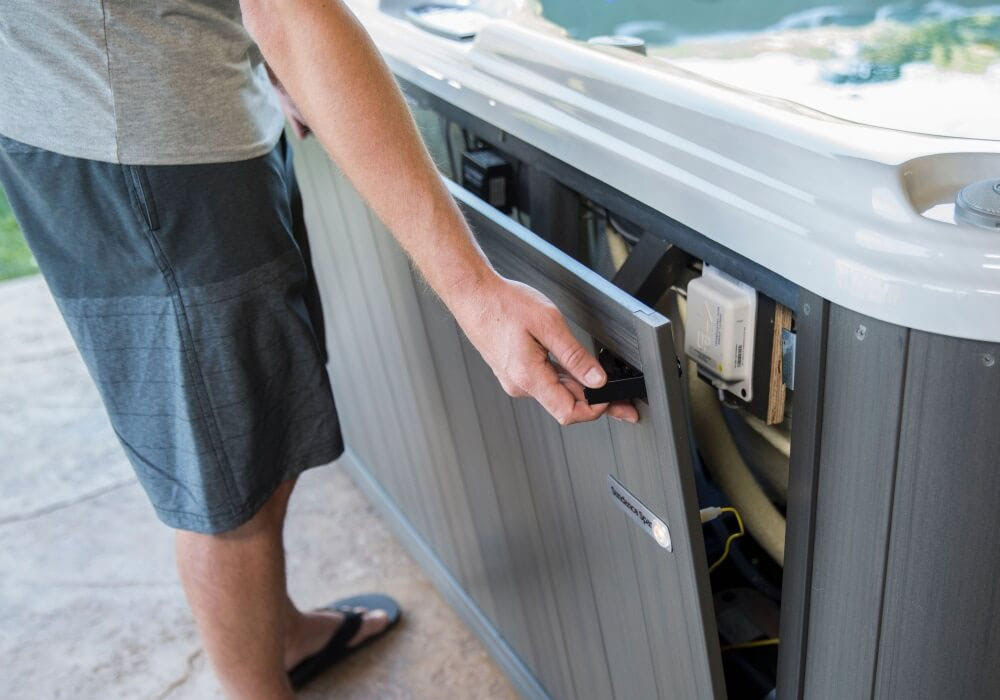
Maintenance Tip: Perform an annual inspection of your cabinet panels to check for gaps, cracks, or damage that could compromise the insulation’s effectiveness. If you notice any issues, bring your spa in for service or contact us for guidance on repairs that will restore energy efficiency.
4. Use Economy/Sleep Mode During Off-Peak Hours
What It Does: Economy mode (sometimes called sleep mode) reduces or pauses heating during hours when you’re not using the spa. Instead of maintaining a constant temperature 24/7, the system allows the water to cool slightly during predetermined periods, then reheats before your typical usage time. If your utility company offers time-of-use rates with cheaper off-peak electricity, you can program heating cycles to take advantage of these lower rates.
How to Set It: Most modern control systems make scheduling simple and intuitive through their user-friendly interface. Set your spa to economy mode during work hours or overnight when you’re sleeping, and program it to return to full temperature an hour before you typically use it. Once configured, the system handles everything automatically. If you need help programming your specific model, stop by The Sundance Spa Store and we’ll show you how.
The Savings: Depending on your usage patterns and local electricity rates, economy mode can reduce heating costs by up to 20%. For a spa that costs $50 per month to heat, that’s a $10 monthly savings or $120 annually.
5. Keep Your Filters Clean
Why It Matters: Dirty filters force your circulation pumps to work significantly harder to move water through the system, consuming more electricity in the process. Clogged filters also reduce water flow to the heater, making the heating process less efficient and causing longer run times to maintain your set temperature.
The Cleaning Schedule: Rinse your filters with a garden hose weekly to remove surface debris and oils. Perform a deep clean monthly using a filter cleaning solution that breaks down oils and minerals. Replace filters annually, or more frequently if you use your spa heavily or notice decreased water flow.
Get the Right Products: The Sundance Spa Store carries professional-grade filter cleaners and replacement filters for all major brands. Using quality cleaning products and genuine replacement filters ensures your filtration system operates at maximum efficiency while keeping your water crystal clear.
6. Maintain Proper Water Chemistry
The Connection: Balanced water chemistry isn’t just about safety and comfort—it’s directly tied to energy efficiency. When water chemistry is off, minerals can form scale deposits on heating elements, acting as an insulator that prevents efficient heat transfer. This scaling can reduce heater efficiency by up to 30%, forcing your system to run longer and consume more electricity to achieve the same temperature.
Action Steps: Test your water 2-3 times weekly using test strips or a liquid test kit. Keep pH between 7.2-7.8, total alkalinity between 80-120 ppm, and sanitizer at appropriate levels. Address imbalances promptly to prevent scale formation. Stop by The Sundance Spa Store to pick up quality water testing kits and treatment products specifically formulated for hot tub use.
7. Reduce Filtration Cycle Duration (If Possible)
The Strategy: Many hot tubs are programmed with overly aggressive filtration cycles that aren’t necessary for light to moderate use. If you use your spa once or twice per week with just one or two people, you likely don’t need the same filtration schedule as someone who uses it daily with multiple bathers. Adjusting filtration cycles to match your actual usage patterns can reduce electricity consumption without compromising water quality.
How to Adjust: Access the filtration settings through your control panel. Start by reducing total filtration time by one hour per day, then monitor water clarity for a week. Continue making small adjustments until you find the minimum filtration time that maintains crystal-clear water. For light use, you might reduce from 8 hours daily to 4-6 hours. For heavy use, maintain or increase standard cycles.
Important: Always prioritize clean, safe water over energy savings. If you notice any cloudiness or water quality issues, return to longer filtration cycles immediately. Our team at The Sundance Spa Store can help you determine the optimal filtration schedule for your specific usage patterns.
8. Minimize Heat Loss: Keep the Cover On
The Problem: Heat loss accelerates dramatically when your spa is uncovered. Even 15 minutes of exposure in winter temperatures can drop your water temperature by several degrees, requiring significant energy to reheat. Wind chill accelerates this cooling effect, especially in exposed locations common across Canada and northern regions.
The Solution: Make covering your spa immediately after each use an automatic habit for everyone in your household. Think of it like closing your refrigerator door—you wouldn’t leave it open for minutes at a time, and the same principle applies to your hot tub. For spas in particularly exposed locations, consider adding windbreaks such as privacy screens, lattice panels, or strategic landscaping to reduce wind chill effects even when you’re using the spa.
9. Strategic Placement and Shelter
For New Buyers: If you’re currently shopping for a hot tub, placement decisions can impact your long-term operating costs significantly. Sheltered locations protected from prevailing winds can reduce heat loss by 25% or more compared to fully exposed installations. A south-facing location maximizes passive solar heating during daylight hours, providing free warmth from the sun. When you visit The Sundance Spa Store, ask our team about optimal placement strategies for your specific property and climate.
For Current Owners: If your spa is already installed in an exposed location, you can still improve efficiency by adding shelter elements. Gazebos, pergolas, and lattice screens provide wind protection while maintaining aesthetics. Natural windbreaks like evergreen hedges offer year-round protection. Even partial shelter helps, particularly if you can block the prevailing winds common during winter months in your area.
Best Locations: Ideal placement combines southern exposure for solar gain with protection from north and west winds. Proximity to your home reduces heat loss during the walk to and from the spa, and having shelter overhead protects the cover from snow and ice accumulation.
10. Schedule Regular Professional Maintenance
Why It Pays Off: Annual professional maintenance ensures all components operate at peak efficiency. Worn seals, struggling pumps, scaled heating elements, and other issues can significantly increase energy consumption long before they cause complete failure. A trained technician can identify and address these efficiency drains before they impact your energy bills substantially.
What’s Included: Professional maintenance typically includes comprehensive component inspection, heating element examination for scale buildup, seal condition assessment, pump performance testing, and control system diagnostics. Technicians can also optimize your system settings based on your specific usage patterns and local conditions.
Start Saving Energy Costs for Your Hot Tub Today
Small changes create significant savings when it comes to reducing hot tub electricity costs. You don’t need to implement all 10 tips at once, you can start with the easiest changes like adjusting your temperature setting and ensuring your cover fits properly, then gradually incorporate additional strategies over the coming weeks.
With these strategies in place, you can enjoy your spa guilt-free knowing you’re minimizing environmental impact while maximizing comfort and value. Lower hot tub bills require smart choices and consistent maintenance that allow you to relax and enjoy everything your hot tub has to offer.
Visit any of our Sundance Spa & Sauna Store locations. We are here to help you maximize your spa’s efficiency and minimize operating costs. Stop by our showrooms for all your hot sub energy saving needs. We carry everything from replacement covers and filters to water care products and genuine parts to keep your spa running efficiently year-round.