Winter Athletic Performance: How Swim Spas Keep Athletes Training Year-Round
-
Share
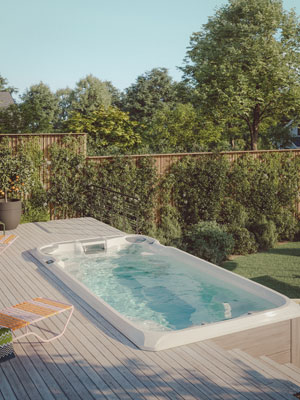
January presents a familiar challenge for serious athletes: how do you maintain peak performance when ice, snow, and sub-zero temperatures make outdoor training dangerous? While your competitors might accept winter as an inevitable off-season, elite athletes know that consistent training separates good from great. Swim spas have emerged as a game-changing solution for winter swim training Ontario athletes need to stay competitive, offering a controlled environment that enables year-round swimming without the weather-related interruptions that derail training programs.
The Winter Training Dilemma
When temperatures drop and daylight disappears by 5 PM, maintaining a consistent training schedule becomes exponentially harder. Outdoor pools close, running paths become ice rinks, and even the commute to indoor facilities can be treacherous. Crowded gym schedules and limited pool lane availability mean athletes often compromise on training quality precisely when they should be building the foundation for the spring competition season. These interruptions don’t just affect immediate fitness—they create gaps in training periodization that can take months to overcome.
Resistance Swimming: Maximum Training in Minimal Space
The core advantage of swim spa athletic training lies in adjustable current technology that creates a continuous swimming experience without the limitations of traditional pool lengths. Unlike lap pools where you must stop, turn, and restart every 25 or 50 meters, resistance swimming allows for uninterrupted stroke work that builds endurance and refines technique simultaneously.
Modern swim spas offer current speeds that accommodate everyone from rehabilitation patients to Olympic-level swimmers, with resistance levels typically adjustable from gentle flows to currents that challenge even the strongest athletes. This customization enables precise interval training—you can program high-intensity sets followed by recovery periods without leaving the water or adjusting your position. For triathletes preparing for open water events, the constant current simulates the experience of swimming against natural water resistance far better than traditional pool training.
The cardiovascular benefits are substantial. According to research published by the American Council on Exercise, swimming engages nearly every major muscle group while providing an effective aerobic workout that can burn between 400-700 calories per hour depending on intensity. The resistance current amplifies these benefits by forcing your body to work harder to maintain position, essentially turning every swim session into combined endurance and strength training. Competitive swimmers use this advantage to maintain stroke count and improve propulsion efficiency—metrics that directly translate to race performance.
Sample 20-Minute Cross-Training Workout
To illustrate the versatility of swim spa athletic training, here’s a high-efficiency workout that combines cardiovascular conditioning, strength work, and active recovery—perfect for runners, team sport athletes, or anyone looking to maintain fitness during winter months:
Warm-Up (3 minutes): Begin with easy swimming at low current resistance, focusing on full range of motion in shoulders and hips. Alternate between freestyle and breaststroke to engage different muscle groups and elevate heart rate gradually.
Interval Block 1 (5 minutes): Increase current to moderate-high intensity. Perform 30 seconds of high-knees running against the current, followed by 30 seconds of recovery (easy marching in place). Complete five rounds. This mimics hill sprints without joint impact, building leg power and cardiovascular capacity.
Strength Circuit (6 minutes): Reduce current to moderate level. Perform three rounds of the following: 45 seconds of flutter kicks while holding the side rail (core and hip flexor strength), 45 seconds of standing arm pulls through the water resistance (upper body power), and 30 seconds of rotational twists against the current (oblique engagement and sport-specific core stability). Rest 20 seconds between rounds.
Interval Block 2 (4 minutes): Return current to high intensity. Alternate 40 seconds of vigorous freestyle swimming with 20 seconds of easy backstroke recovery. Complete four rounds, focusing on maintaining stroke form even as fatigue accumulates.
Cool-Down (2 minutes): Reduce current to minimal flow. Perform gentle leg swings, arm circles, and easy walking to gradually lower heart rate while maintaining circulation to working muscles.
This workout delivers cardiovascular stimulus, builds functional strength, and maintains movement patterns—all without the impact stress that causes overuse injuries during high-volume winter training. Athletes can adjust current intensity and work-to-rest ratios based on fitness level and training goals.
Preventing Cold Weather Injuries
Ontario winters don’t just make outdoor training uncomfortable—they make it genuinely dangerous. Icy conditions increase fall risk, cold muscles are more susceptible to strains and tears, and overuse injuries spike when athletes compensate for reduced training variety by overloading whatever indoor options remain available.
Swim spas eliminate these risks by providing a temperature-controlled environment year-round. Water temperatures typically maintained between 80-84°F (27-29°C) keep muscles warm and pliable throughout workouts, reducing injury risk compared to cold-weather outdoor training. According to the National Institute of Arthritis and Musculoskeletal and Skin Diseases, warm water exercise can help maintain joint flexibility and reduce pain, making it particularly valuable for athletes managing chronic conditions or recovering from previous injuries.
The buoyancy factor cannot be overstated. Water supports approximately 90% of your body weight when submerged to neck level, according to the Arthritis Foundation, dramatically reducing joint stress during high-volume training periods. This allows athletes to maintain training intensity and duration without the cumulative microtrauma that eventually manifests as overuse injuries. Distance runners plagued by shin splints, stress fractures, or IT band syndrome can maintain aerobic fitness through swim spa training while allowing damaged tissues to heal—something impossible with continued road running.
The convenience of home-based training also prevents injuries indirectly. When your training facility is steps from your door rather than a treacherous drive away, you’re far more likely to maintain consistent warm-up and cool-down routines. You won’t skip stretching because you’re rushing to get home before dark, and you won’t cut sessions short due to facility closing times or limited lane availability.
How Elite Athletes Use Swim Spas
Professional and collegiate athletes increasingly incorporate swim spa athletic training into periodized programs, particularly during off-season conditioning phases. The controlled environment allows coaches to prescribe exact training intensities and monitor progress with precision impossible in traditional settings.
Training camps use swim spas for morning recovery sessions that promote circulation and reduce muscle soreness without interfering with afternoon skill work or evening strength training. The ability to perform quality cardiovascular work without impact stress means athletes can train multiple times daily—a volume that would quickly lead to overtraining if attempted through running or traditional pool swimming alone. Pre-season conditioning programs leverage swim spas to build aerobic base fitness before introducing sport-specific intensity, creating a foundation that supports the higher training loads competition season demands.
The privacy factor matters more than many athletes initially recognize. Training at home eliminates the distractions, social dynamics, and scheduling conflicts that come with shared facilities. You can focus entirely on workout quality without navigating crowded lanes, waiting for equipment, or adjusting your training schedule around facility availability. For athletes following highly specific training protocols, this control over the training environment becomes a genuine competitive advantage.
Practical Considerations for Serious Athletes
While swim spas require upfront investment, the calculation changes when you consider the cumulative costs of gym memberships, pool fees, and lost training time during facility closures or commutes in winter weather. Many athletes find that within several years, the cost-per-training-session becomes competitive with traditional facility access—especially when factoring in the convenience value and ability to train on optimal schedules rather than facility schedules.
Modern swim spas are engineered for year-round outdoor use even in Ontario’s climate, with proper installation including appropriate insulation and winterization. This means you’re not sacrificing valuable indoor living space, and the cold air contrast can actually enhance the training experience much like the plunge pools elite athletes use for contrast therapy.
Don’t Let Winter Define Your Off-Season
The athletes who emerge strongest each spring are the ones who maintained consistent, quality training through winter months when others were making excuses. Winter swim training Ontario doesn’t have to mean compromised workouts, injury risk, or gaps in your training log. Swim spas provide the controlled, accessible, versatile training environment that keeps serious athletes progressing toward their goals regardless of what’s happening outside.
Year-round swimming gives you more than just maintaining fitness and it provides a psychological edge. While competitors are battling ice, darkness, and crowded facilities, you’re executing precisely the training your program demands. That confidence and consistency compound throughout the season, ultimately manifesting as performance gains when competition arrives. The question isn’t whether you can afford a swim spa—it’s whether you can afford to let another winter derail your athletic development.
Visit any of our Sundance Spa & Sauna Store locations to create the perfect backyard entertaining experience.