Mastering Hot Tub Water Care in Summer: Managing Heat, Evaporation, and Chemistry
-
Share
Summer is the perfect season to enjoy your hot tub, and with a few simple adjustments, you can keep your water pristine all season long. While warmer weather and extra sunshine mean your spa chemistry needs a little more attention than in spring, maintaining crystal-clear water is easy when you know how the seasons affect your water balance.
A few proactive tweaks to your routine will help keep your hot tub water fresh and inviting throughout the hottest months. Mastering your summer hot tub maintenance is all about understanding these natural environmental changes, helping you spend less time worrying about water quality and more time relaxing.
Understanding Hot Tub Water Evaporation in High Heat
Significant hot tub water evaporation occurs during the summer because high air and water temperatures provide the energy needed for water molecules to escape as vapor. According to Penn State climate data, sunny and warm conditions drastically increase evaporation rates from open water surfaces. Even if you aren’t using your spa daily, the heat alone can cause water levels to drop noticeably during a hot week.
That matters beyond the water level. As water evaporates, it leaves dissolved minerals and chemicals behind in a smaller volume, which can concentrate calcium and other dissolved solids over time. If you’ve noticed scale or cloudiness creeping in during hot stretches, our guide on calcium build-up in hot tub water covers how that concentration effect shows up and what to do about it.
How Direct Sun Exposure Degrades Your Sanitizer
Evaporation concentrates some dissolved substances, but it works against you in a different way with sanitizer. Chlorine breaks down under ultraviolet light. Government toxicology data indicate that chlorine is broken down by sunlight within several minutes, according to the Agency for Toxic Substances and Disease Registry (ATSDR), part of the CDC. The same sun that warms your water also degrades free chlorine and bromine near the surface.
The CDC’s guidance for pool and spa operators backs this up on the practical side: chlorine levels drop for several reasons, and sunlight, dirt, debris, and swimmers’ skin oils are all listed as factors that reduce chlorine in the water. That’s why testing matters more, not less, once the sun gets stronger. A spa left uncovered in direct sun for hours is losing sanitizer capacity the whole time, whether or not anyone gets in.
Balancing Hot Tub Chemicals in Hot Weather and High Bather Loads
Summer is the peak season for entertaining, but more guests mean a higher “bather load.” Organic materials like body oils, sunscreen, and sweat put a heavy demand on your sanitizer. Effectively balancing hot tub chemicals in hot weather requires keeping pace with these shifts. Increased usage often leads to pH swings, so test your water based on activity levels rather than a rigid weekly schedule.
The Reality of Summer Hot Tub Maintenance
Many owners assume that warm weather makes upkeep easier, but summer hot tub maintenance actually demands more consistency. You are simultaneously managing evaporation, UV degradation, and heavier bather loads. Without regular monitoring, your water chemistry can drift out of a safe range in just a few days.
Five Ways Summer Changes Your Hot Tub Water
- Heat and sun speed up evaporation, concentrating minerals and calcium in a smaller volume of water
- Direct UV exposure breaks down free chlorine and bromine faster than in cooler, shadier conditions
- Heavier bather load from guests and parties increases sanitizer demand and pH swings
- Evaporated water needs regular topping off, which dilutes sanitizer levels and calls for re-testing
- Warmer water supports faster chemical reactions, including sanitizer demand
A Practical Summer Hot Tub Maintenance Routine
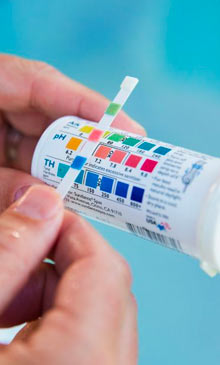
Tighten your routine rather than overhaul it. Test the water every two to three days during peak summer weeks instead of once weekly, since evaporation and UV exposure both occur faster than in spring. Check sanitizer first, since it’s the front line against bacteria and the skin most affected by sun exposure. Check pH and total alkalinity right alongside each other, since bather load affects both.
Top off the water as it drops from evaporation, and re-test afterward, since fresh water changes your readings. Keep the cover on whenever the spa isn’t in use during the day. This limits UV exposure and slows evaporation, giving sanitizer a better chance of holding steady between tests. Before and after hosting guests, test and adjust again, since a spike in bathers is usually followed by a spike in sanitizer demand.
For the mechanics of a proper fill and ongoing schedule, our water maintenance guide for fresh fills and weekly care walks through the basics, and if it’s been a while since your last full service, our guide on how to drain, clean, and refill your spa covers the full reset.
When Water Care Turns Into Water Trouble
Even a solid routine can slip during a busy summer. Cloudiness, odor, and foam are the usual signs. If sanitizer keeps reading low despite regular dosing, a shock treatment may be the fix; our post on what spa shock is and when to use it walks through that decision. If foam or persistent cloudiness has already set in, our troubleshooting guides on foamy and cloudy hot tub water can help you pin down the cause.
Sundance Spas Helps You Keep Your Hot Tub Balanced
Summer hot tub maintenance comes down to staying ahead of three things happening at once: evaporation, UV breakdown, and bather load. Test a little more often, keep the cover on when you can, and adjust as conditions change.
If you’re unsure of the balance of your water, feel free to bring a sample into any of our five showrooms in St. Catharines, Hamilton, Burlington, Mississauga, and Vaughan. We’ll gladly test it for you and advise you on how best to treat the water to keep it safe, balanced, clean, and clear, so you can use your hot tub regularly.